Uncategorized

Using Sign Language to Build Early Communication in Infants

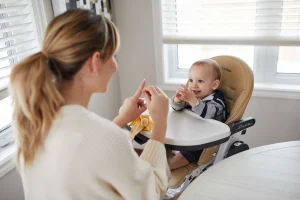
What if infants could clearly tell us what they want before they can talk? With simple sign language, they can! Teaching infants signs gives them a voice even before they have words. Research shows that babies as young as 6 months can learn simple signs, which can lead to reduced frustrated crying and support early language development.

Babies have ways to communicate by making facial expressions, crying, and making sounds. However, they can be hard to understand, leading to lots of frustration. By teaching them signs that match their needs, the child is able to communicate better and sooner. Infants learn signs easier compared to learning spoken words, and studies have even confirmed that learning sign language has helped the child develop speech.

Beginning around 6 months, adults can model signs and gently physically prompt the baby to mirror the sign. Prompts and rewards can be motivating but should be gradually delayed to encourage independence. Some useful, simple signs to introduce are “more”, “please”, “up”, “food”, and “all done”. This process of teaching will eventually lead to independent signing from the babies in real scenarios. Communication will become more specific and calmer.

Even if you don’t have a baby to teach, taking the time to learn basic sign language is a small step that can make a big difference. It’s a language everyone can use to connect.

If you would like to read more, click here!

Grace Hoey

UConn KIDS Research Assistant

Trivia Tuesday!

Uconn Kids in Developmental Science: Trivia Tuesday Banner

The answer to last week’s question: How many times as active is a 3-year-old’s brain compared to an adult’s brain?

Is 2x as active!

260+ Peekaboo Stock Illustrations, Royalty-Free Vector Graphics & Clip Art  - iStock | Baby peekaboo, Playing peekaboo, Mother peekaboo

This week’s trivia question is:

Which cognitive milestone is most related to why peek-a-boo is such a fun game for babies?

a. conservation

b. symbolic play

c. object permanence

d. babbling

The Role of Play in Child Learning and Development

While play is often dismissed as entertainment or a break from structured learning, research suggests it plays a crucial role in supporting and fostering essential cognitive abilities in children’s development. While traditional education tends to emphasize instruction and correct answers, play creates an environment where children can learn through curiosity and exploration. Play encompasses a range of forms, with each type contributing to development uniquely. Examining how these forms function highlights the fundamental skills they promote and can provide valuable insight for parents and educators seeking to support children’s learning.

One of the most important aspects of play is its intrinsic motivation. Because children are able to choose if, how, and what they want to play, they are able to remain actively engaged and are more willing to test ideas and combine creativity without the fear of failure. Furthermore, during play, children frequently follow and create their own rules, negotiate social roles, and manage emotions, providing opportunities to practice social and behavioral regulation.

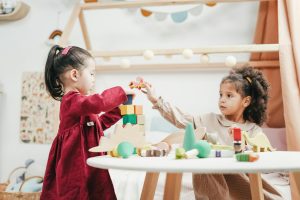
The different forms of play continue to contribute to child development in distinct ways. Physical play promotes motor coordination, emotional regulation, and social competence, while constructive play involving objects stimulates creativity, spatial reasoning, and persistence in problem-solving tasks. Symbolic and language-based play supports communication skills and literacy development through abstract representation, and pretend play enhances imagination, perspective-taking, and emotional understanding. Structured games with rules further reinforce cognitive control and strategic thinking by requiring children to follow guidelines and adapt behavior in social contexts.

Considering play as an integral part of child development, understanding the potential benefits of play can allow parents and educators to incorporate playful experiences into more traditional learning environments. In doing so, they can enhance engagement, creativity, and problem solving in their children’s development.

If you want to read more, click here!

Thank you!

Chelsey Ko 

UConn KIDS Research Assistant

Today Friday Feature is Afrah Rafi!

Afrah is a research assistant for UConn KIDS. She is a senior Physiology & Neurobiology and Molecular & Cellular Biology double major with a minor in Neuroscience. After graduation she plans on applying to and attending medical school, and hopes to specialize in something that allows her to continue working with kids! Outside of school, she is involved in Future Health Leaders and volunteers with UCHL, and she also works as a home healthcare PCA.

Afrah is so excited for the opportunity to be a UConn KIDS research assistant this semester, and we are excited to have her!

When Do Kids Say Their First Words?


When is that magical moment when a child goes from coos and babbles to real words? HELLO Lab’s latest episode, “When Do Kids Say Their First Words,” looks at this question using research and real footage from their lab! 

This episode explains that before words fully emerge, babies spend several months practicing sounds, listening closely, and learning how communication works. Word learning is a long, yet important process. The video discusses the milestones babies reach before they begin to talk. All the small steps lead to the child learning about the purpose of communication.  

Although the moment at which children begin talking varies, most babies develop important communication skills throughout infancy before spoken language emerges. 

Watch more here!

Grace Hoey 

UConn KIDS Research Assistant

Sleep Apnea and Sleep Disorders in Children with ADHD

Image of a young boy sleeping on a bed with a teddy bear in his arms.

Children in ADHD often also have sleep disorders, such as insomnia or obstructive sleep apnea, and trouble sleeping at night can double up on the effects of ADHD. Obstructive sleep apnea is a disorder where a person may find it hard to breathe at night, leading to trouble sleeping, increased tiredness during the day, and periods of low oxygen throughout the night. In children, this can lead to symptoms similar to those described of kids with ADHD: emotional dysregulation, cognitive deficits, and behavioral issues. Sometimes these symptoms are not seen as indicative of a sleep disorder in kids with ADHD, and some may go undiagnosed.

It is well known that a percentage of children of ADHD also have some sort of sleep disorder, and this research aimed to get a more concrete statistic and also classify which sleep disorders appear to be the most common. After assessing over 600 kids with ADHD, it was found that 70% had a sleep disorder of some sort! The most common sleep disorders, were insomnia (40.2%) and obstructive sleep apnea (23.4%). Factors like ADHD subtype, sleep-related behaviors, and comorbidities (having other disorders/conditions as well), appear to be associated with sleep problems.

Because poor sleep is known to negatively affect behavior, mood, and learning, it is important to recognize how common sleep disorders are in kids with ADHD. These researchers advocate for routine sleep screenings and appropriate sleep interventions to help kids with ADHD sleep better at a young age!

If you want to read more, click here!

Thank you!

Afrah Rafi

UConn KIDS Research Assistant

Trivia Tuesday

Uconn Kids in Developmental Science: Trivia Tuesday Banner

Welcome back to Trivia Tuesday with UConn KIDS!

This week’s question is multiple choice regards the brain activity of toddlers:

How many times as active is a 3-year-old’s brain compared to an adult’s brain?

A) 2x as active

B) 3x as active

C) 2x less active

D) 3x less active

Stay tuned in next week to find out the answer to this week’s question, and for more trivia next Tuesday!

The “Critical Period” for Language Acquisition Goes Beyond Spoken Language

In the last 10-20 years, the idea of a “critical period” to learn language has become more widely recognized. Parents and schools alike have started to teach children a second language at younger and younger ages, but many still don’t understand what this really means or the possibilities of this idea.

As more and more research is done on the matter, it turns out that humans are born with an innate ability to pick up language. Since communication is such an important feature of our species, we have a significant part of our brain dedicated to both the comprehension and expression of language. The most surprising part is that a child who starts learning a second language at the age of 3 may understand that language better at age 13 than an adult who has been learning it for the same amount of time. This is because when we are very young, even starting as soon as the auditory pathways begin developing in the womb, we start trying to make sense of language. Up until the age of 4 months old, babies can even differentiate between dialects of different languages. After 4 months, we start to lose this ability if not exercised. The same concept goes for learning to understand and express language as a whole. We are born with the most ability to receive new language learning we will ever have, and as we age, if not exposed to new languages, we slowly lose the ability to pick up these languages as easily, “Use it or Lose it.” One of the most groundbreaking discoveries about the critical period is that it does not just apply to spoken language.

This specific article examines how the age at which deaf individuals are first exposed to American Sign Language (ASL) affects their language abilities later in life, providing strong support for the idea of a critical period for language learning. The researchers compared deaf adults who learned ASL from birth, during early childhood, or later in adolescence, and found that earlier exposure led to stronger language comprehension and more accurate use of grammar, even many years later. Those who learned sign language later had more difficulty understanding full sentence meaning, suggesting that the brain is especially prepared to develop language during early childhood. These findings support the broader theory that language learning is most effective during a critical period and becomes more difficult after that window closes. This research also has important implications for bilingualism, as it suggests that early exposure to more than one language, whether spoken or signed, can support stronger overall language development, while delayed exposure may limit fluency. Overall, the study highlights the importance of providing children with early access to rich language environments to support lifelong communication and learning.

If you want to read more, Click Here

Thank you!

~Cooper Armogida

UConn KIDS Research Assistant

Is Learning Multiple Languages Confusing My Kid?


Young Children Learning Multiple Languages: Parent FAQs - HealthyChildren.org

Many parents worry that exposing a child to more than one language might confuse them or make it harder for them to learn to talk. UConn’s HELLO Lab helps break down that concern in a simple, research-based way. The speaker explains that children’s brains are actually built to handle multiple languages from a very early age, and they naturally sort out which words belong to which language as they grow.

The video also shares that bilingual and multilingual children reach their major language milestones—like saying their first words or forming sentences—on a timeline that is completely normal. Hearing two or more languages doesn’t “overload” them. Instead, it gives them extra tools for thinking, communication, and understanding the world around them.

Overall, the episode reassures families that raising a child with more than one language is not only safe; it can be incredibly beneficial. It encourages caregivers to feel confident that supporting a child’s home language while also introducing English (or another language) can strengthen connection, identity, and long-term learning.

If you want to watch more, click here!

Erin Mulroy

UConn KIDS Research Assistant
Direct and indirect effects of smoking during pregnancy on child development

A new 2025 study from the Japan Environment and Children’s Study (JECS) takes a closer look at how smoking during pregnancy affects young children’s development. While we often hear that smoking can lead to lower birth weight or exposure to harmful chemicals, this research wanted to understand something deeper: does smoking itself directly influence how a child grows, learns, and develops in the first few years of life? To answer this, the researchers followed nearly 4,800 mother–child pairs, tracking the mothers’ smoking habits and evaluating the children’s developmental skills at ages two and four.

The mothers in the study were grouped by their smoking behavior: those who never smoked during pregnancy, those who quit before pregnancy, those who quit after finding out they were pregnant, and those who continued smoking throughout. The children were later assessed on thinking skills, early language and communication, social behavior, and motor skills. The researchers also looked at factors like birth weight and cadmium levels in the mother’s blood, since cadmium is a toxic metal found in cigarette smoke and has been linked to developmental concerns.

The clearest finding was that boys whose mothers smoked while pregnant showed noticeable developmental delays at both ages two and four. Their scores in areas like problem-solving, communication, and social development tended to be lower compared to boys whose mothers did not smoke. Interestingly, the same pattern was not as strong or consistent in girls, suggesting that boys may be more sensitive to prenatal exposure to smoking. The study also showed that the developmental differences were not simply due to babies being born smaller or being exposed to cadmium—meaning the act of smoking itself likely plays a direct role in affecting early brain development.

For families and health professionals, these findings offer an important takeaway. Avoiding smoking during pregnancy is not only about protecting a baby’s physical health at birth—it also supports the child’s long-term developmental well-being. This research adds another layer to our understanding of prenatal health and reinforces why reducing smoking during pregnancy remains a critical public health priority.

If you want to read more, click here!

Erin Mulroy

UConn Kids Research Assistant