Author: Chelsey Ko

Early Bilingualism in Child Development

Bilingual Children Stock Photos and Images - 123RF

With approximately 68 million individuals raised in multilingual households in the United States, many parents share concerns regarding the benefits and disadvantages of raising their children bilingual and the appropriate approaches to do so. However, misconceptions circulating children’s language acquisition promote misinformation among parents. It is important for them to understand and acknowledge these misconceptions to aid their children’s development.

One of the most common misconceptions is that bilingual children experience language delays. While it may seem as if bilingual children know fewer words compared to monolingual children, they typically develop language skills at a similar rate. This perceived delay occurs because the vocabulary of bilingual children is distributed across two languages as opposed to one. This causes their knowledge to seem limited in each individual language when their overall vocabulary is comparable in reality. Understanding this disproves the misconception that learning two languages puts bilingual children at a disadvantage by hindering their language acquisition.

In addition to disproving widespread misconceptions, research also acknowledges the advantages of raising bilingual children, especially when they are given equal exposure and opportunity to both languages. From an early age, children are capable of distinguishing between languages and can adjust their use of each depending on their environment.  This skill in turn allows several cognitive benefits to flourish, including enhanced communication skills, attention spans, mental flexibility, and problem-solving skills. These findings demonstrate bilingualism as a beneficial process for children instead of its negative associations. When children are given consistent opportunities to engage with both languages, they are able to develop strong communication abilities alongside valuable cognitive skills.

To learn more, click here!

Chelsey Ko 

UConn KIDS Research Assistant

Trivia Tuesday

Welcome back to Trivia Tuesday with UConn KIDS!

Last week’s question: At what age range do children learn to imitate and play pretend?

Last week’s answer: B) 2-7 years


This week’s question is…

What age do children begin organizing information in their memories?

a) around 3 years old

b) around 6 years old

c) around 5 years old

d) around 7 years old

Tune in next week to find out the answer!

The Benefits of Outdoor Play

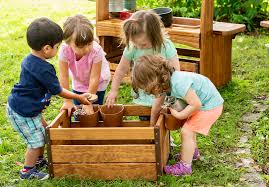
With the increasing use of technology among children, it is more important than ever for them to spend time outside. Studies suggest outdoor play offers more benefits to children’s development than many may realize. Outdoor play offers various physical, mental, and social benefits for children, establishing a healthy foundation for them to build on. Examining these benefits highlights the advantages of spending time outside by providing a clear understanding of its role in child development.

Spending time outside encourages kids to be active through activities like running, climbing, and exploring. This helps them build and maintain strength and coordination by integrating active habits that they can carry into adulthood. Playing outside offers also many long-term health benefits for children by promoting the production of vitamin D through frequent exposure to sunlight. While vitamin D can also be obtained through diet, playing outside ensures sufficient levels of the vitamin, which is necessary for building strong bones. Increased levels of vitamin D also boosts immune systems, improves moods, and decreases health risks to obesity, in turn, lowering chances of health issues linked to it, including asthma, sleep apnea, diabetes, and cardiovascular disease..

In addition to physical health benefits, playing outdoors supports emotional growth and assists the development of interpersonal skills. Exposure to greenery supports kids’ curiosity, increases sensory engagement, and improves focus, creativity, and problem-solving skills in many ways that indoor activities cannot. It also provides opportunities for children to interact with others, helping them practice communication, cooperation, and sharing as they build relationships and navigate group activities.

Making time for outdoor play helps ensure they develop the physical strength, cognitive abilities, emotional resilience, and social skills needed to thrive. As the weather continues to get warmer, children have even more opportunities to spend time outside and engage in these activities, so support your child’s development by encouraging them to take advantage of the sunlight!

To read more about the advantages of outdoor play, click here!

Chelsey Ko 

UConn KIDS Research Assistant 

The Method to Boosting Children’s Confidence

Think Tank Thursday Banner

270,400+ Confident Kid Stock Photos, Pictures & Royalty-Free Images -  iStock | Confident kid portrait, Self confident kid, Confident kid school

In “A surprising way to boost your child’s confidence”, Pediatric Psychologist Dr. Kathryn Hecht encourages parents to embrace their children’s anxiety and discomfort to build their internal confidence. With a 30% increase of youth diagnoses of anxiety from 2016 to 2019 alone, she addresses negative misconceptions about anxiety by reassessing its role in children’s development. Rather than interpreting anxiety as a roadblock, she reimagines it as a stepping stone to one’s foundational courage.

As a mother herself, Hecht understands the reassurance in “parenting for comfort”. She too is a victim to it. but her empathy for the issue doesn’t change its consequences. “Parenting for comfort” is a form of parenting that provides guardians relief by accommodating to their children’s fears in order to maximize their happiness. This method stigmatizes anxiety in kids, which can negatively affect how they address problems in the future. Not only does it affect their children’s development, it creates significant burden on parents themselves. To tackle this issue, she offers valuable insight: happiness does not equate health. Accommodation does not provide long-term confidence. It only offers temporary consolation and promotes inhibitory learning.

Instead, she advises parents to let their children struggle in place of suffering by leading by example. She calls this “parenting for confidence”. “Parenting for confidence” reimagines anxiety as an essential ingredient to building children’s courage. When parents live by example, they send the message to that they too can conjure the strength to attack hard things. Then, eventually, they’ll be able to ask, “What else am I capable of?”

In this surge of anxiety in youth, it is more important than ever for parents to be cognizant of how their mentality affects their children’s development. By utilizing discomfort, parents can help their children build resilience that will benefit them for the rest of their lives.

To learn more, watch this video!

Chelsey Ko 

UConn KIDS Research Assistant 

Trivia Tuesday

Welcome back to Trivia Tuesday with UConn KIDS!

Last week’s question: How many neural connections (synapses) are formed per second in the first few years of a baby’s life? 

Answer: 1 million

This week’s trivia question is:

Around what week of pregnancy do babies begin to smell the same smells as their mother?

A)  20 weeks

B) 18 weeks

C) 15 weeks

D) 10 weeks

Tune in next week to find out the answer!

Risk of Caffeine Consumption in Adolescents

Caffeine consumption among youth and teens has risen in recent years, largely due to the popularity of energy drink brands like Celsius and Alanis. However, children are exposed to caffeine in many everyday foods and beverages, including soda and chocolate. Research from the National Institute of Health explores the effects of caffeine on children’s health and development by evaluating its potential benefits and risks in children under the age of twelve. 

Some studies suggest caffeine can have short-term benefits. As a stimulant, caffeine activates the central nervous system, increasing alertness, attention, and reaction time. However, because children have a lower body mass than adults, they may experience stronger physiological effects due to varying metabolic effects. Sleep disruption is one of the most common concerns regarding caffeine consumption in adolescents. Adequate sleep is essential for healthy physical, cognitive, and psychological growth and development. Disrupting this process may indirectly alter the weight and growth of children, as well as emotional and behavioral regulation and sensitivity, presenting increasing concern for the child’s development. 

However, these effects largely depend on the amount of caffeine consumed. Researchers analyze caffeine intake in children by body weight, with low doses around 1 mg per kilogram per day, moderate doses around 3 mg/kg/day, and high doses around 5 mg/kg/day. While low amounts may produce mild stimulating effects, moderate and high levels are more likely to lead to negative health outcomes. Since children are more sensitive to caffeine, even moderate consumption can have noticeable physiological effects.

Understanding how caffeine dose and intake affects children can assist in developing healthier dietary habits and helping kids maintain proper sleep habits and concentration. 

To learn more about the effects of caffeine in children, click here!

Chelsey Ko 

UConn KIDS Research Assistant

Trivia Tuesday

Welcome back to Trivia Tuesday with UConn KIDS!

Last week’s question: By age 8, about what percent of U.S. children have regular access to a tablet or smartphone?

Answer: 50% of U.S. children have regular access to a tablet or smartphone.

This week’s trivia question is:

Talking to babies has proven to be extremely beneficial to their language development. How many more words do babies who are frequently spoken to recognize versus those who aren’t? 

A)  500 words

B) 200 words

C) 300 words

D) 700 words

Tune in next week to find out the answer!

The Impact of AI on Children’s Development

The presence of AI is more prevalent than many realize: social media algorithms, generative AI, conversational agents. Between Alexa, Siri, and ChatGPT, it is important for parents, caregivers, and teachers alike to understand the impact of AI exposure and interaction on their children’s development as we continue to advance towards an AI-driven society.

Interaction and use of AI presents two major concerns in children’s critical thinking and social development. While AI offers instant access to information and assistance, it can inhibit children’s ability to think critically and evaluate the credibility of the information given to them. However, this issue can be easily resolved by educating children in AI literacy. It is important for children to understand the information that AI presents is not always correct. Similar to evaluating information and news in the media, educators should emphasize the potential spread of misinformation in AI. Reflection prompts installed by developers operate alongside educators in alleviating this issue as they attempt to encourage critical thinking in children. These efforts are in place in many conversational AI tools.

Engagement with AI can also have a significant effect on children’s social interaction and politeness. Children can pick up linguistic habits from AI and implement them to social interactions with their families and peers. Since AI cannot replicate real conversations and does not always follow typical social norms or encourage the use of polite language, engagement with AI can result in rude or inappropriate language in children. In the same way, since communicating with AI is not the same as human interaction, these interactions lack empathy and shared experiences. While developers have begun to introduce politeness through the implementation of polite sayings like “Thank you” in response to the use of “Please”, AI can never replace true companionship or human interaction.

Despite these concerns, AI can provide potential benefits to children’s development within certain parameters. AI developed with learning principles can provide productive scaffolding in directing students’ work and tools in improving task performance to encourage critical thinking. Alongside the efforts by educators, this collaboration between teachers and developers is essential in ensuring children are supported rather than hindered by AI.

To learn more, click here!

Thank you!

Chelsey Ko

UConn KIDS Research Assistant

Do the first 1,000 days determine the rest of your life?

Think Tank Thursday BannerStages of Brain Development in Children | NJPNI

Have you ever wondered how your baby’s exposure shapes them as a person?

DeeDee Yates’ TED Talk, “Do the first 1,000 days determine the rest of your life?” explores this concept by examining the scale of influences on an infant’s development. In this video, she emphasizes the importance of early interventions within babies’ first 1,000 days after birth, acknowledges the numerous stages they pass through and begin with, and the several factors that can affect and shape them during this period.

Click here to watch this video and learn more!

Chelsey Ko

UConn KIDS Research Assistant

The Role of Play in Child Learning and Development

While play is often dismissed as entertainment or a break from structured learning, research suggests it plays a crucial role in supporting and fostering essential cognitive abilities in children’s development. While traditional education tends to emphasize instruction and correct answers, play creates an environment where children can learn through curiosity and exploration. Play encompasses a range of forms, with each type contributing to development uniquely. Examining how these forms function highlights the fundamental skills they promote and can provide valuable insight for parents and educators seeking to support children’s learning.

One of the most important aspects of play is its intrinsic motivation. Because children are able to choose if, how, and what they want to play, they are able to remain actively engaged and are more willing to test ideas and combine creativity without the fear of failure. Furthermore, during play, children frequently follow and create their own rules, negotiate social roles, and manage emotions, providing opportunities to practice social and behavioral regulation.

The different forms of play continue to contribute to child development in distinct ways. Physical play promotes motor coordination, emotional regulation, and social competence, while constructive play involving objects stimulates creativity, spatial reasoning, and persistence in problem-solving tasks. Symbolic and language-based play supports communication skills and literacy development through abstract representation, and pretend play enhances imagination, perspective-taking, and emotional understanding. Structured games with rules further reinforce cognitive control and strategic thinking by requiring children to follow guidelines and adapt behavior in social contexts.

Considering play as an integral part of child development, understanding the potential benefits of play can allow parents and educators to incorporate playful experiences into more traditional learning environments. In doing so, they can enhance engagement, creativity, and problem solving in their children’s development.

If you want to read more, click here!

Thank you!

Chelsey Ko 

UConn KIDS Research Assistant