
Uncategorized

What Lack of Sleep Does to the Teenage Brain

Think Tank Thursday BannerPoor sleep linked to a common cause of blindness - Harvard Health

In the Ted Talk, “What Lack of Sleep Does to the Teenage Brain” sleep scientist Wendy Troxel explains how chronic sleep deprivation is harmful to teenagers and how a large part of this problem is caused by the early start times for middle and high schools. The vast majority of teenagers are not getting the 8-10 hours of sleep a night that is recommended for teenagers. Troxel explains that because teenagers go through a shift in when their body gets naturally sleepy, teenagers get tired around 2 hours later than children and adults, and so waking up for school at 6am is even harder for a teenager than it is for an adult.

Sleep is so important for brain growth and development, especially for teenagers who are learning so much every day. Sleep is the time when they should be able to rest and relax and let their brain develop, but a chronic lack of sleep hinders a teenager’s ability to do so. Not only this, but sleep deprivation adds to and worsens many behavioral and mental health issues in teenagers, many of which are currently on a rise, such as depression, anxiety, and reckless driving.

Troxel argues that although it will be difficult to make the switch the later school start times, it is a necessary switch for the health and well-being of teenagers. More sleep will allow them to do better at school, have improved mental and physical health, and be the best version of themselves!

To learn more, watch the full video here!

Afrah Rafi

UConn KIDS Research Assistant

The Benefits of Outdoor Play

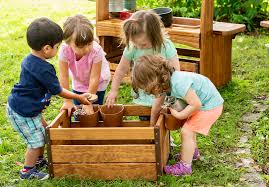
With the increasing use of technology among children, it is more important than ever for them to spend time outside. Studies suggest outdoor play offers more benefits to children’s development than many may realize. Outdoor play offers various physical, mental, and social benefits for children, establishing a healthy foundation for them to build on. Examining these benefits highlights the advantages of spending time outside by providing a clear understanding of its role in child development.

Spending time outside encourages kids to be active through activities like running, climbing, and exploring. This helps them build and maintain strength and coordination by integrating active habits that they can carry into adulthood. Playing outside offers also many long-term health benefits for children by promoting the production of vitamin D through frequent exposure to sunlight. While vitamin D can also be obtained through diet, playing outside ensures sufficient levels of the vitamin, which is necessary for building strong bones. Increased levels of vitamin D also boosts immune systems, improves moods, and decreases health risks to obesity, in turn, lowering chances of health issues linked to it, including asthma, sleep apnea, diabetes, and cardiovascular disease..

In addition to physical health benefits, playing outdoors supports emotional growth and assists the development of interpersonal skills. Exposure to greenery supports kids’ curiosity, increases sensory engagement, and improves focus, creativity, and problem-solving skills in many ways that indoor activities cannot. It also provides opportunities for children to interact with others, helping them practice communication, cooperation, and sharing as they build relationships and navigate group activities.

Making time for outdoor play helps ensure they develop the physical strength, cognitive abilities, emotional resilience, and social skills needed to thrive. As the weather continues to get warmer, children have even more opportunities to spend time outside and engage in these activities, so support your child’s development by encouraging them to take advantage of the sunlight!

To read more about the advantages of outdoor play, click here!

Chelsey Ko 

UConn KIDS Research Assistant 

Trivia Tuesday!

Welcome back to Trivia Tuesday with UConn KIDS!

Last week’s question: What is the recommended amount of daily exercise for elementary age children?

Last week’s answer: B) 60 minutes


This week’s question is…

At what age range do children learn to imitate and play pretend?

a) 0-2 years

b) 2-7 years

c) 7-11 years

d) 12 years and older

Why Do We Use Baby Talk?

Talking in baby talk might feel silly, but babies are paying close attention. Language learning starts much earlier than you would expect, and baby talk is part of how babies learn. 

This article explains that even though babies actually understand a lot more language than people think. Linguistics professor Jeffrey Lidz has spent years studying how young children learn language. His research shows that babies start to understand important parts of language like sentence structure, much earlier than expected. 

In a recent study, Lidz and his colleague found that by around 18 months, children already have a strong understanding of syntax (how words are arranged in sentences). Toddlers still understand things like the difference between nouns and verbs and how words in a sentence connect to each other, even if they struggle to speak clearly.  

Using baby talk with simplified speech and exaggerated tone helps babies pay better attention to sounds and patterns, making it easier for them to learn language. 

Click here to learn more!

Grace Hoey

UConn KIDS Research Assistant

The Method to Boosting Children’s Confidence

Think Tank Thursday Banner

270,400+ Confident Kid Stock Photos, Pictures & Royalty-Free Images -  iStock | Confident kid portrait, Self confident kid, Confident kid school

In “A surprising way to boost your child’s confidence”, Pediatric Psychologist Dr. Kathryn Hecht encourages parents to embrace their children’s anxiety and discomfort to build their internal confidence. With a 30% increase of youth diagnoses of anxiety from 2016 to 2019 alone, she addresses negative misconceptions about anxiety by reassessing its role in children’s development. Rather than interpreting anxiety as a roadblock, she reimagines it as a stepping stone to one’s foundational courage.

As a mother herself, Hecht understands the reassurance in “parenting for comfort”. She too is a victim to it. but her empathy for the issue doesn’t change its consequences. “Parenting for comfort” is a form of parenting that provides guardians relief by accommodating to their children’s fears in order to maximize their happiness. This method stigmatizes anxiety in kids, which can negatively affect how they address problems in the future. Not only does it affect their children’s development, it creates significant burden on parents themselves. To tackle this issue, she offers valuable insight: happiness does not equate health. Accommodation does not provide long-term confidence. It only offers temporary consolation and promotes inhibitory learning.

Instead, she advises parents to let their children struggle in place of suffering by leading by example. She calls this “parenting for confidence”. “Parenting for confidence” reimagines anxiety as an essential ingredient to building children’s courage. When parents live by example, they send the message to that they too can conjure the strength to attack hard things. Then, eventually, they’ll be able to ask, “What else am I capable of?”

In this surge of anxiety in youth, it is more important than ever for parents to be cognizant of how their mentality affects their children’s development. By utilizing discomfort, parents can help their children build resilience that will benefit them for the rest of their lives.

To learn more, watch this video!

Chelsey Ko 

UConn KIDS Research Assistant 

Oral Language Acquisition in Preschool Children Who are Deaf and Hard-of-Hearing

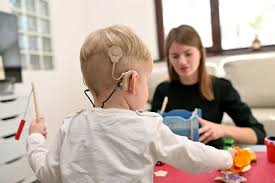
One article that really stood out to me is Oral Language Acquisition in Preschool Children Who are Deaf and Hard-of-Hearing by Werfel, Reynolds, and Fitton (2022). As a UConn student studying psychology and working in a lab focused on language development in deaf and hard-of-hearing (DHH) children, this topic immediately felt relevant to both my academic interests and real-world impact. The study focuses on how DHH children develop language during the preschool years, which is such an important window for both communication and overall cognitive growth.

What makes this article especially interesting is that it follows the same children over time, rather than just taking a single snapshot. The researchers looked at vocabulary and grammar development in DHH children between the ages of four and six and compared them to their hearing peers. One of the most encouraging findings is that DHH children do make steady and meaningful progress in their language skills over time. This is huge! It reinforces the idea that these children are very capable of strong language development when given the right opportunities and support.

At the same time, the study found that the gap between DHH children and hearing children does not fully close by the time they reach school age. Differences in vocabulary and grammar are still present, which highlights how early these gaps can emerge. What really stood out to me is that these differences are already noticeable during the preschool years. For parents, this underscores how important early language exposure and intervention can be in shaping long-term outcomes. Additionally, this highlights the need for a bridge, from early intervention to the implementation of individualized education plans, so that DHH children continue to close that gap when they get to school, rather than the gap becoming larger!

From my perspective, this article sends an important and hopeful message. It shows that development is not fixed, but it also emphasizes how critical early access to language is. Whether that access comes through spoken language, sign language, or a combination of both, what matters most is that children are given consistent and meaningful opportunities to communicate from an early age. Overall, this study offers valuable insight into how children learn language and why early support can make such a lasting difference.

To read more, click here

Cooper Armogida

UConn KIDS Research Assistant

Trivia Tuesday!

Welcome back to Trivia Tuesday with UConn KIDS!

Last Week’s Question: Around what week of pregnancy do babies begin to smell the same smells as their mother?

Last Week’s Answer: 20 weeks


This week’s question is…

What is the recommended amount of daily exercise for elementary age children?

A) 30 minutes

B) 60 minutes

C) 15 minutes

D) 90 minutes

Tune in next week for the answer!

The 30 Million Word Gap

The word gap, otherwise referred to as the 30 million word gap, describes the gap in how many words are heard by a young child who is from a low socioeconomic status (SES) family versus a child from a higher SES family. The term was first coined by researchers Betty Hart and Todd Risley in 1995, and though there is some controversy around whether the word gap is much lower than 30 million words (instead closer to a few million), the point remains that there is a marked difference in the vocabulary of children based on their economic background.

This article by the National Association for the Education of Young Children (NAEYC) explores the word gap, how it manifests in small children, and some strategies to try to combat it and improve the vocabulary of all children. The article focuses on a study looking a 18 month and 24 month old children to determine the difference in language processing and vocabulary in toddlers of different SES backgrounds. Kids were shown pictures of two different object and then played a recording that said one of the object’s name and used it in a sentence. Eye-tracking software revealed that kids from higher economic background looked at the corresponding picture faster and spent more time looking at the correct picture, compared to the kids from lower economic backgrounds, indicating their knowledge of the vocab word and a faster processing time. In fact, the 24-month-olds from the low SES group were performing at the same level to the 18-month-olds from the high SES group, demonstrating the word gap in action from such a young age.

Thus, the word gap is clearly real and affects children in real and harmful ways. Not only will young children in lower SES families have less exposure to a range of words, and thus a less developed vocabulary, but the word gap may also lead to issues further down the line, including trouble with reading skills and school success in general.

So what can we do to eliminate this inequality? Although systematic changes will be needed to completely eliminate the word gap, as it is a result of systematic inequalities in our society, we can make small changes at home and in schools to ensure each child is exposed to as many words as possible in their early childhood. This includes reading to children daily, encouraging conversation between children, introducing new words on a regular basis, and using songs and rhymes to playfully introduce vocabulary. It is vital that both teachers and parents are aware of the word gap so they can do their best to combat it and set their kids up for success.

To learn more, read the full article here!

Afrah Rafi

UConn KIDS Research Assistant
Inside the Mind of a Newborn Baby

Think Tank Thursday Banner

In the Ted Talk “Inside the mind of a newborn baby”, psychologist and philosopher Claudia Passos Ferreira suggests that newborn babies may be more conscious of the world around them then previously thought. Ferreira explains how only a few decades ago, it was common belief that newborns were not conscious at all and could not feel pain. Babies were though to be “passive observers” of the chaotic, confusing world around them. Nowadays we know this isn’t fully true, and that babies can certainly feel pain, but then what does really goes on in the mind of a newborn?

Referencing key research done in the fields of neuroscience and psychology, Ferreira makes a compelling argument that newborns are consciously taking in the world around them, not just from birth but possibly even as early as the last few weeks of pregnancy! Brain scans show that babies respond to variations in patterns with activation of the same brain regions as adults. Newborns also seem to exhibit the same phenomena as adults when concentrating on one thing and taking time to shift attention to a new thing, babies just need a lot more time to do so!

All of the research discussed in the Ted Talk leads Ferreira to believe that babies possess a level of conscious thought and processing higher than what was previously imagined. We’ll never being able to ask a baby what they are thinking and have them respond, which is where the difficulty in researching this topic arises. Thankfully, today’s research, done by people like Claudia Passos Ferreira and many more, helps us get closer to a better understanding of our little ones!

To learn more, check out the full video!

Afrah Rafi

UConn KIDS Research Assistant

When Should You Start Swim Lessons?

All children should have swimming lessons. According to the CDC, drowning is the leading cause of death in children ages 1-4. It is important to do everything you can to prevent accidents from happening, but what are the age-appropriate steps to take with swimming lessons?

Start early by helping your child get familiar with the bathtub. Use this controlled, safe environment to get your child used to the feeling of water on their face and their head briefly under water. Try filling up the bathtub more to help them feel what it means to float. Practicing blowing bubbles underwater also helps with breath control and reduces the risk of swallowing water. Confidence in swimming begins at home with active supervision in the bathtub.

Every child’s development is different in terms of their readiness for swimming lessons, but around the age of 4, children typically gain the cognitive skills necessary to follow instructions and retain new information. This is the perfect time to introduce your child to swimming lessons to keep them safe in the water. Knowing how to float, tread water, and swim to a surface are skills that can save their lives.

Getting some resistance from the child because they are scared of the water is normal, as swimming can be a strange, new experience. That being said, it is so important to keep persevering for the sake of your child’s safety. Gradually increasing familiarity with the use of active support and positive reinforcement can help make the process less scary.

As they master the basics of swimming safety and get older, they can move on to learn different strokes. Spending more time in water with family and friends increases their knowledge of the different ways to move underwater.

Prevention of accidents does not only include swimming lessons, but it also includes constant active supervision by an adult, use of proper floatation devices, and accessibility to a safe area to swim.

Click here to learn more!

Grace Hoey

UConn KIDS Research Assistant