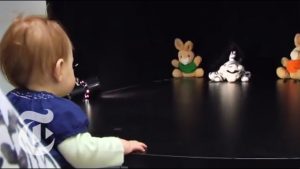
Many parents are amazed by how early babies seem to understand the world around them. Research over the years has suggested that even very young infants can tell the difference between “good” and “bad” behavior. For example, in classic baby psychology experiments, infants often prefer a character that helps another over one that hinders. This has led some scientists to believe that babies might be born with a basic moral sense. But a newer study offers a different, simpler explanation.
Instead of babies making moral judgments, the researchers suggest that infants may just be responding to basic positive and negative experiences they see on screen. The researchers wondered: are babies really judging helpfulness, or are they just reacting to what looks and feels good or bad? To test this, they redesigned the experiments.
They found that babies are incredibly smart, but their preferences may come from simple cause-and-effect learning rather than built-in moral reasoning. Instead of thinking, “That character was nice,” they may be thinking, “That scene made me feel good.” This doesn’t mean babies won’t grow into moral thinkers. It just shows that what looks like morality in the first year of life might actually be the early building blocks of learning how the world works. Simple experiences like comfort, joy, surprise, and discomfort may be the foundation that later supports real moral understanding. Babies may not be born with a moral compass, but they are constantly learning from what feels good and what doesn’t, and that’s where their future sense of right and wrong begins.
If you want to read more, click here!
Angelina Stofka
UConn KIDS, Research Assistant